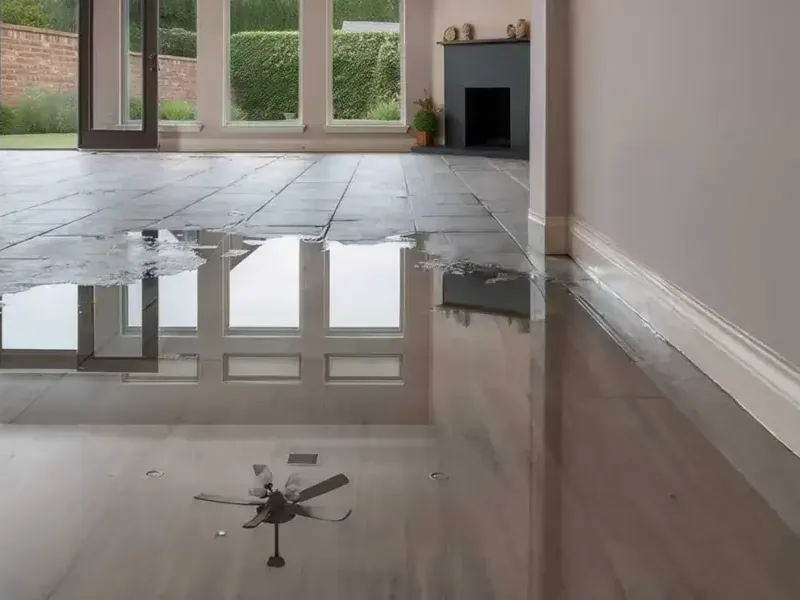
The Loosahatchie River runs along the north side of town, and heavy rain can put water on low ground and sometimes into houses. The first question is what that water is and what it has touched. This post covers the first day: what the flood record shows, why river water is handled differently from a leak, and the order of the steps that come before any drying.
Key takeaways
- Water from a river or flooded ground is Category 3 under the IICRC S500 standard, so the porous materials it touched usually come out instead of drying in place.
- National Weather Service flood statements for the Arlington gauge name Highway 70 and low ground north of the railroad tracks among the first areas to take water.
- On December 24 to 25, 1987, 9.2 inches of rain fell in 12 hours over northern Shelby County, and the river ran at about its 50-year flood flow.
- Safety comes first: stay out of flooded rooms until the power is dealt with, and photograph the high-water mark before anything is moved.
- The order of work is extraction, removal of soaked materials, then structural drying checked against a dry reference.
What the Loosahatchie flood record shows
The Loosahatchie River is fully channelized. A channelized river still fills when enough rain falls upstream and over the surrounding ground.
The benchmark storm came on December 24 to 25, 1987. Some 9.2 inches of rain fell in 12 hours over northern Shelby County, and the river near Arlington ran at about its 50-year flood flow, according to USGS report WRI 89-4019.
Flood statements from the National Weather Service for the gauge list Highway 70 and low ground north of the railroad tracks among the first places to take water.
That record is useful for planning. A household near those areas can decide ahead of time where vehicles will move and which belongings will be lifted.
- Highway 70 and the low ground north of the railroad tracks are named as early trouble spots
- A single half day of heavy rain was enough to push the river to a 50-year flow in 1987
- A channelized river is an engineered channel, not a flood-proof one
Why river water is not handled like a leak
Water from a river, a creek or flooded ground carries soil, bacteria and runoff. The IICRC S500 standard places it in Category 3, the grossly contaminated category.
That changes the plan. Instead of drying everything where it sits, a crew removes the porous materials the water touched and cleans and treats what stays.
The service is described in more detail under flood water cleanup.
What usually comes out
Porous materials soak up contamination along with the water, so these items are normally removed:
- Carpet and pad that sat in the water
- Drywall and insulation that wicked water up the wall
- Baseboard and trim that cannot be cleaned all the way through
- Cabinet kick plates and particleboard that swell
What can often stay
Framing, subfloor and slab are normally cleaned and dried rather than replaced.
Solid surfaces are judged item by item once the mud and film are cleaned off. Cleaning agents are applied to the surfaces that stay, which is part of treating Category 3 water.
Safety steps before anything is touched
Standing water can hide live outlets and extension cords. The first moves are about safety, not cleanup.
- Turn off power to flooded rooms at the panel only if the panel is dry and can be reached without stepping in water.
- Stay out of rooms with standing water until an electrician or the crew says the circuits are safe.
- Photograph the high-water mark on the walls, the flooring and the contents before moving anything.
- Lift small valuables, papers and electronics to a high shelf or a dry room.
- Keep children and pets out of the water, which carries bacteria.
- Skip household fans and the central air system while water is still in the house.
Extraction comes first
The longer water sits, the farther it wicks into pad, drywall and framing. A crew starts with water extraction, using truck-mounted or portable units to pull standing water off the floor.
Once the floor is clear, the crew cuts out soaked pad, wet insulation and the lower section of wet drywall, known as a flood cut. Opening the wall early gives the framing room to dry.
The crew records these points before demolition starts:
- Where the water entered and how high it rose on the walls
- Which rooms and materials got wet
- Moisture readings taken at several spots in each room
- Photos of every room before anything is removed
Sorting furniture and belongings
Contents are sorted while the structure is opened up. Sorting early keeps ruined items from sitting in a damp house and spreading contamination.
Most households end up with three piles:
- Items cleaned and kept, such as solid wood, glass, metal and plastic pieces
- Items set aside for a closer look, such as framed photos, documents and electronics
- Items discarded, such as upholstered furniture, mattresses and anything porous that sat in the water
Drying the structure and keeping the record
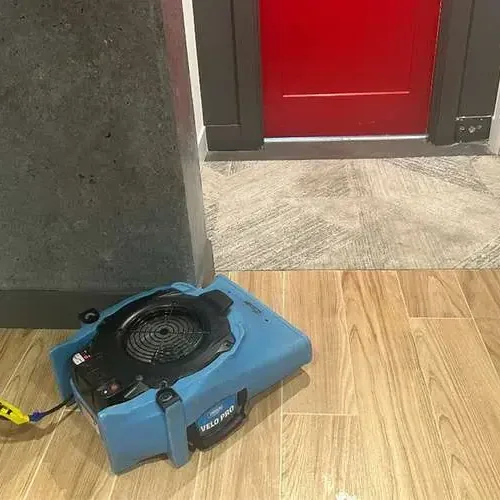
After removal, structural drying runs air movers and dehumidifiers until readings come back to within 2 to 4 points of a dry reference. Readings are logged daily, so the finish date follows the data instead of a guess.
Drying time depends on how high the water rose, what the walls are made of and the weather. No fixed number of days fits every house.
- Daily moisture readings taken at the same spots
- The count and placement of air movers and dehumidifiers
- A note each time equipment is moved or taken out
Watching the river before the next storm
Flood statements for the gauge give advance notice for the areas that take water first. Households on low ground can use them to choose when to move vehicles and lift contents.
If water also rose through a floor drain or toilet, it is mixed with sewage and falls under sewage backup cleanup. The removal steps are the same, with added treatment of the surfaces that stay.
Questions
Is river flood water different from water from a burst pipe?
Yes. A burst supply pipe releases clean water that can often be dried in place if it is caught early. Water from a river or flooded ground is Category 3, so porous materials usually come out.
Can drywall that sat in river water be saved?
The lower section is usually cut out and replaced, because drywall wicks water upward and holds contamination. A moisture meter shows how high the cut needs to go.
Does a channelized river still flood?
It can. The 1987 storm put the Loosahatchie at about its 50-year flood flow, and the river is channelized now.
What should be photographed before cleanup starts?
Take pictures of the high-water mark on each wall, the flooring, damaged furniture and any appliances that sat in the water. Photos taken before removal support a claim and show the crew what the rooms looked like.
When is it safe to turn the power back on?
Only after an electrician has checked the circuits and outlets that got wet. Standing water and wet wiring are a shock hazard even when the power looks off.
Why does flood water get cut out of walls instead of just dried?
Drywall and insulation hold contaminated water and cannot be cleaned through. Cutting above the wet area removes the contamination and opens the cavity so the framing dries.