Water Extraction and Removal in Arlington, TN
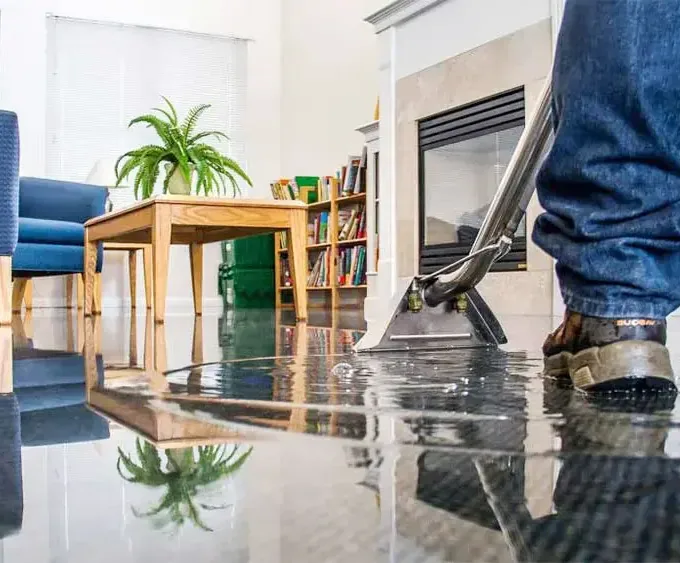
Standing water does the most harm in the first hours. The extraction crew pulls it out with truck-mounted extraction, so drying starts on damp materials instead of flooded ones.
(888) 849-5796Water on the floor? Pull it out now- Truck-mounted extraction
- Weighted pad extraction
- Moisture mapped first
Water Extraction and Removal: what to do first
- Stop the source
Close the main shutoff or the valve at the fixture, then switch off power to wet rooms from a dry panel.
- Keep people and pets off wet floors
Standing water hides tack strip, loose tile and live outlets near the floor.
- Move what can float or wick
Lift rugs, boxes, books and furniture legs off the wet floor so they stop drawing water up.
- Photograph before cleanup
Wide shots and close-ups of the water line go straight into the insurance file.
How the crew handles water extraction and removal
Moisture mapping
The tech who does the walkthrough marks how far the water travelled with pinless meters and thermal imaging, including under baseboards and into the next room.
Bulk extraction
The extraction crew runs truck-mounted units for standing water and switches to weighted pad tools on carpet so the pad gives up its water too.
Hand-off to drying
Once the water is out, the drying team sets air movers and LGR dehumidifiers to the wet area the map shows.
What does water extraction and removal cost in Arlington, TN?
Most water extraction jobs here run $500 to $6,000, depending on how many rooms hold water, whether carpet and pad are soaked and whether the water is clean, gray or black.
One room or a hallway
- Truck-mounted extraction
- Carpet and pad extracted in place
- Moisture map for the file
Several rooms
- Pad removed where it cannot be saved
- Baseboards pulled where water wicked
- Drying equipment set the same visit
Category 3 or whole floor
- Contaminated water handled as Category 3
- Porous flooring removed
- Containment and antimicrobial
Ranges only, not a quote. The drivers are the water category, the square footage, the material class and how fast drying started. For a planning number, try the water damage cost calculator.
Water extraction is the step that decides how long the rest of the job takes. Pulling water out as a liquid is far faster than evaporating it later, so the extraction crew removes every gallon it can before a single air mover goes down.
Why water extraction comes before drying
Carpet pad, drywall and subfloor soak up standing water like a sponge. Every hour the water sits, it climbs higher into the wall and spreads under flooring into the next room.
- Truck-mounted units pull water with far more suction than a shop vacuum
- Weighted extraction tools squeeze water out of pad that a surface wand leaves behind
- Portable units reach upstairs rooms, crawl spaces and closets where hoses cannot run
Where water extraction happens in local homes
Most calls start with a split pipe, a washer hose or a water heater, and the water heads for the lowest point. In slab homes that means the carpet and the bottom of the walls. In crawl-space homes, part of it drops through the subfloor and needs crawl space water removal as well.
The EPA notes that wet materials should be dried within 24 to 48 hours to limit mold growth, which is why extraction is treated as urgent. See EPA advice on indoor moisture.
What water extraction leaves behind for the drying team
After extraction, the floor feels damp rather than wet, and the moisture map shows what still holds water. That map sets where structural drying equipment goes and how long it runs. When storm water is involved, Ready.gov flood safety advice covers the electrical and health risks to watch.
Trade fact: clean water that sits more than a day or two can turn Category 2, and the drying plan changes with it.
The four stages of water extraction and removal
- 01
Find the edge of the water
Meters and thermal imaging show where the wet area really ends, often past the visible stain.
- 02
Extract standing water
Truck-mounted extraction removes standing water from hard floors and the surface of the carpet.
- 03
Extract the pad
Weighted tools press water out of the pad; pad soaked with gray or black water comes out instead.
- 04
Set drying and log it
Air movers and dehumidifiers go in, and the first readings are logged for the claim.
Water extraction and removal across Arlington and nearby towns
The restoration team covers ZIP 38002 from Depot Square and the Highway 70 corridor out to Chapel Ridge, Hunters Walk, Belmont, Summer Meadows and the newer streets off Airline Road.
Nearby coverage reaches Lakeland, Bartlett, Brunswick, Eads, Oakland, Gallaway, Atoka and Munford.
38002
Water Extraction and Removal questions in Arlington, TN
How fast should standing water be extracted?
As soon as possible. Water keeps wicking into drywall and subfloor while it sits, and the 24 to 48 hour window for mold growth starts when the water does.
Can I use a shop vacuum instead of water extraction?
A shop vacuum helps on a small spill, but it cannot pull water out of carpet pad or reach water under baseboards. Truck-mounted extraction removes far more water per pass.
Does carpet have to be thrown out after water extraction?
Not always. Carpet wet with clean water and extracted quickly can often be dried in place. Pad usually comes out, and carpet touched by sewage or flood water is removed.
How long does water extraction take?
Extraction itself usually takes a few hours for a few rooms. Drying the structure afterward typically takes three to five days for a contained loss.
Is water extraction covered by insurance?
When the water came from a sudden and accidental event such as a burst pipe, extraction is commonly part of a covered claim. Coverage depends on your policy, so check with your own insurer.
What happens after the water is extracted?
The drying team sets air movers and dehumidifiers, takes readings every day and removes equipment only when materials are within 2 to 4 points of a dry reference.
Standing water in the house? Call now.
Water left on the floor climbs into drywall and spreads under flooring. The extraction crew is on call 24/7 across town and the nearby Shelby County towns.