Structural Drying and Dehumidification in Arlington, TN
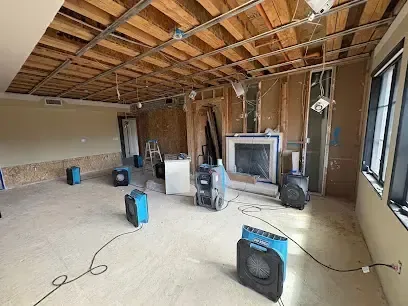
Surfaces dry fast; framing, subfloor and slab do not. The drying team sets dehumidifiers and air movers to the evaporation load of each room and logs readings until the structure is dry.
(888) 849-5796Walls still damp? Book the drying- LGR and desiccant dehumidifiers
- Daily psychrometric logs
- Dry-reference verification
Structural Drying and Dehumidification: what to do first
- Stop the water source
Drying cannot finish while water keeps arriving.
- Leave the equipment running
Turning air movers or dehumidifiers off at night adds days to the job.
- Keep doors and windows closed
Humid outdoor air slows the dehumidifiers in most of the year.
- Keep the heat or AC steady
A steady indoor temperature helps the equipment work at its best.
How the crew handles structural drying and dehumidification
Set the drying chamber
The drying team closes off the wet area so dehumidifiers work on a defined space.
Match equipment to the load
Air movers and LGR dehumidifiers are sized to the class of loss; desiccants handle dense Class 4 materials.
Read and adjust daily
Moisture and psychrometric readings each day show what is drying and where equipment moves next.
What does structural drying and dehumidification cost in Arlington, TN?
Most structural drying jobs here run $1,000 to $8,000, set mainly by how many rooms are wet, the class of loss and how many days the equipment runs.
One or two rooms
- Air movers and one dehumidifier
- Three to four days
- Daily readings
Several rooms or a ceiling
- Several LGR dehumidifiers
- Injection drying for walls
- Psychrometric logs
Whole floor or Class 4
- Desiccant dehumidification
- Hardwood and slab drying
- Extended monitoring
Ranges only, not a quote. The drivers are the water category, the square footage, the material class and how fast drying started. For a planning number, try the water damage cost calculator.
Structural drying is the part of water damage restoration nobody sees, and the part that decides whether problems come back. A floor can look dry in a day while the subfloor, bottom plates and slab still hold water.
How structural drying works
Water leaves materials by evaporation, and the air can hold only so much. Air movers speed evaporation at the surface, and dehumidifiers pull that moisture out of the air so evaporation can keep going. The class of loss, 1 through 4, tells the drying team how much evaporation each room needs.
- LGR dehumidifiers for most rooms
- Desiccant dehumidifiers for dense materials and cool spaces
- Injection drying for closed wall cavities and under cabinets
- Drying mats for hardwood and concrete
Why structural drying matters in a humid climate
Mid-South air is humid for much of the year, so opening windows rarely helps; it usually brings more moisture in. Closed drying chambers and the right dehumidifier capacity do the work. The EPA recommends drying wet materials within 24 to 48 hours to limit growth; see EPA moisture advice and EPA indoor air advice.
When structural drying is done
Equipment comes out when readings in the wet materials land within 2 to 4 points of a dry reference material in the same house, not when the room looks dry. That record goes into the claim file. Drying usually follows water extraction and runs on every service, from a slab leak to a frozen pipe.
The four stages of structural drying and dehumidification
- 01
Measure
Meters and thermal imaging map wet materials and record a dry reference for each one.
- 02
Set equipment
Air movers and dehumidifiers are sized and placed to the evaporation load of each room.
- 03
Log daily
Moisture and psychrometric readings are recorded every day and the setup is adjusted.
- 04
Verify dry
Equipment comes out only when materials read within 2 to 4 points of the dry reference.
Structural drying and dehumidification across Arlington and nearby towns
The restoration team covers ZIP 38002 from Depot Square and the Highway 70 corridor out to Chapel Ridge, Hunters Walk, Belmont, Summer Meadows and the newer streets off Airline Road.
Nearby coverage reaches Lakeland, Bartlett, Brunswick, Eads, Oakland, Gallaway, Atoka and Munford.
38002
Structural Drying and Dehumidification questions in Arlington, TN
What is structural drying?
Drying the materials of the building itself, such as framing, subfloor, slab and wall cavities, rather than just the visible surfaces, to a measured dry goal.
How long does structural drying take?
A contained Class 1 or 2 loss usually dries in three to five days. Hardwood, slabs and Class 4 materials can take a week or more.
Can I turn the equipment off at night?
It is best not to. The equipment works around the clock, and turning it off lets moisture settle back into materials and adds days.
Why not just open the windows?
Outdoor air here is humid much of the year, so open windows often add moisture. Closed rooms with dehumidifiers dry faster.
How do I know the house is really dry?
Daily readings are compared to a dry reference material in the same home. Equipment comes out when the wet materials read within 2 to 4 points of that reference.
Is structural drying part of an insurance claim?
When the water came from a covered event, drying is usually part of the mitigation scope. Coverage depends on your policy, so check with your own insurer.
Floors and walls still wet? Call now.
Hidden moisture in framing and subfloor keeps causing trouble until it is measured and dried. The drying team works 24/7.