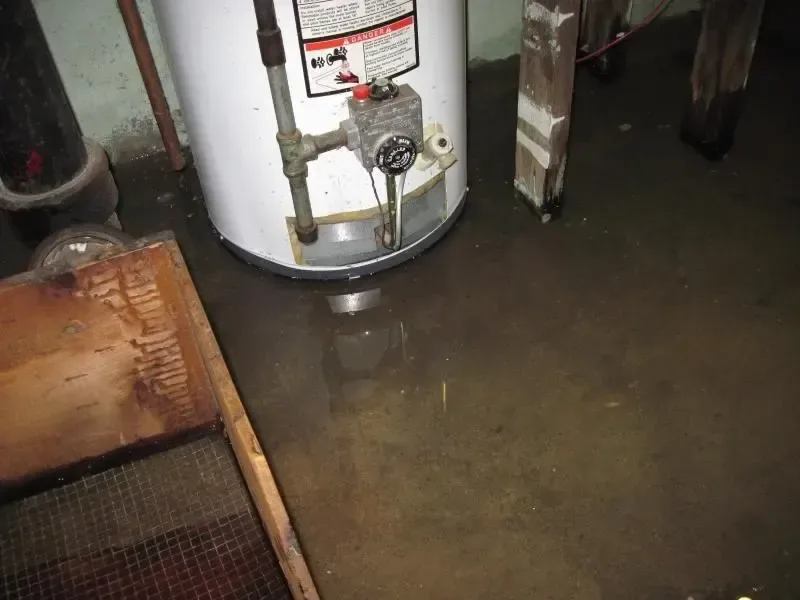
A leaking tank water heater can soak a closet, garage or attic floor, and the replacement is regulated. Bartlett Code Enforcement says water heater work needs a permit, so the cleanup and the new tank have to be planned together. This post covers the shutdown, the permit rules the city states and what the cleanup involves.
Key takeaways
- Code Enforcement says water heaters, HVAC systems and electrical work require permits.
- Any alteration or repair to a building needs a permit, and plumbing, electrical, mechanical and gas piping each need separate permits from contractors of that trade.
- A building permit stays valid for 6 months as long as construction has begun and inspections have started.
- A tank that leaks from its body is replaced, not patched, so extraction and drying run alongside the permitted swap.
- Shut off the cold water supply and the heater's power or fuel before anything else.
What a failed tank does to a house
A tank fails from a corroded seam, a worn fitting or a valve that leaks. The flow can be a slow weep for weeks or a full tank emptying across the floor.
The slow version does the most hidden harm, because water wicks into wall bottoms and subfloor long before anyone sees a puddle. These are the usual warning signs:
- Rust-colored streaks or water at the base of the tank
- A damp ring or puddle on the floor around the heater
- A relief valve that drips again and again
- Corrosion on the pipe connections at the top of the tank
Shutting the heater down safely
Stopping the water comes before cleaning it up. The order below keeps the shutdown safe even when the floor is wet.
The tank may keep dripping while it empties. A plumber can drain it to a safe spot so water stops reaching the floor, and towels and a shallow pan hold small amounts in the meantime.
- Close the cold water valve on the pipe that feeds the tank.
- For an electric heater, switch off its breaker at the panel, reaching the panel only from dry ground.
- For a gas heater, turn the gas control to off.
- Keep clear of electrical parts that are sitting in water.
- Photograph the tank, the leak and the wet floor before anything moves.
Permit rules for the replacement
A leaking tank is replaced, and the city treats that replacement as permitted work. The rules below are the ones Code Enforcement states.
What needs a permit
The city says water heaters, HVAC systems and electrical work require permits. A permit is also needed for any alteration or repair to a building.
Plumbing, electrical, mechanical and gas piping each need separate permits from contractors of that trade, so a tank swap can involve more than one.
The date of the swap depends on the permit as well as on the drying, so both schedules are set at the start.
How long the permit lasts
A building permit stays valid for 6 months as long as construction has begun and inspections have started.
Fees and inspection steps are not covered here. The Code Enforcement office has those details.
Where the tank sits changes the damage
The same failure looks different depending on the location of the heater. The crew checks the route the water took before deciding how far to open.
In every case the crew's first move is the same: find the route the water took and follow it with moisture readings.
Closet or utility room
Water moves into wall bottoms and under the door into the next room, where it reaches carpet and baseboard.
Garage
Water spreads across the slab and soaks boxes, tools and the bottom of the walls. Stored items on the floor are often ruined first.
Attic
Water runs through insulation into the ceiling below. The stain that appears may be well away from the tank itself.
A leak in an attic can run for a long time before anyone sees it.
Cleanup before the new tank goes in
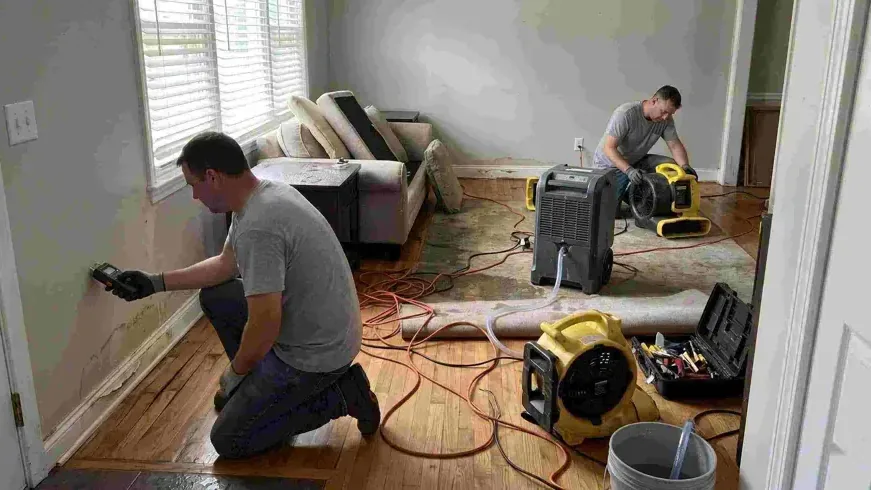
A crew handling water heater leak cleanup begins with water extraction, removing standing water from the floor and out of carpet or pad.
Wet baseboard, soaked insulation and the bottom of wet drywall are cut out, and air movers and a dehumidifier run until readings match a dry reference.
Carpet and pad near the heater are checked for contamination from rust and sediment, and clean carpet is often lifted, dried and kept. Cabinets, trim and doors near the tank are checked the same way.
Planning the two jobs together keeps the drying from being cut short and keeps the permit window in view. The sequence usually runs like this:
- Shut down the old tank
- Extract the water and remove wet materials
- Dry the framing and subfloor, with readings logged
- Install the new tank under its permit
- Take final moisture readings and close up the walls
Questions to ask before the replacement starts
A short conversation with the contractor saves delays later. These are the questions worth settling first.
- Has the permit been applied for, and who is handling it?
- Which trade handles the plumbing and which handles any gas or electrical work?
- Will the old tank be hauled away with the rest of the debris?
- Will the area be dry before the new tank goes in?
- Will the crew take moisture readings after the old tank comes out?
- Does the new tank sit in a place where a future leak can drain safely?
Keeping a record of the loss
A leak that damaged flooring, walls and stored items is easier to sort out with notes. Most of them can be collected on the first day.
These items make up a simple file:
The crew adds a moisture log as drying proceeds, so the file shows when each area read dry. Local help with water damage restoration can supply that log with the final readings.
- Photos of the tank, its data plate and the leak
- A list of damaged flooring, cabinets and stored items
- The date the permit was applied for
- The final moisture readings from the crew
Questions
Does replacing a water heater here need a permit?
Code Enforcement says water heaters, HVAC systems and electrical work require permits. The contractor doing the work normally pulls it.
Can a leaking water heater tank be repaired?
A tank that leaks from its body is replaced, because patching does not hold. A leak at a fitting or valve can sometimes be repaired by a plumber.
How long does a building permit last?
The city says a building permit stays valid for 6 months as long as construction has begun and inspections have started.
Should the area dry before the new tank goes in?
Yes. Wet framing and subfloor hold moisture, and closing them up too soon traps it behind new materials.
Who pulls the permits for a water heater swap?
The city says plumbing, electrical, mechanical and gas piping each need separate permits from contractors of that trade. The contractor on each part handles that permit.