Crawl Space Water Removal in Atoka, TN
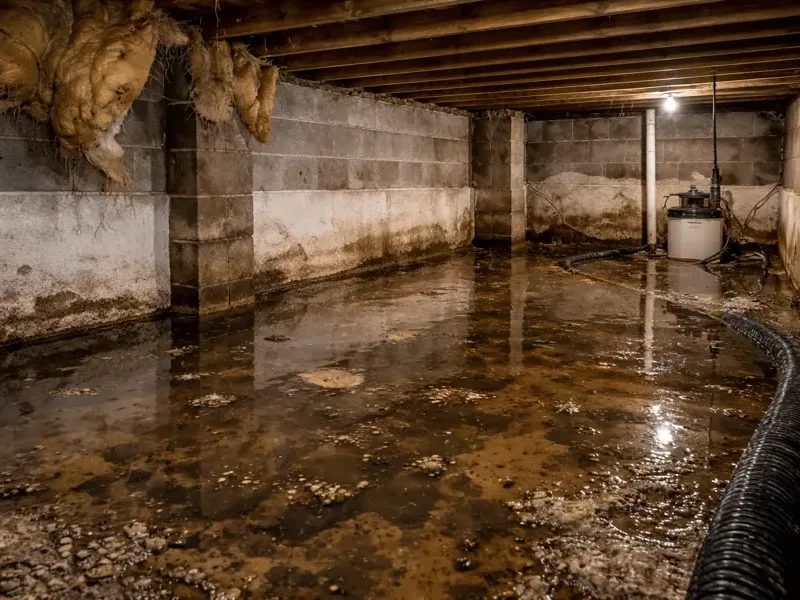
Water in a crawl space soaks insulation, joists and subfloor out of sight. The crew pumps it out, removes what cannot dry and dehumidifies the space until readings are normal.
(888) 849-5796Pump out the crawl space- Pump-out and extraction
- Wet insulation removal
- Dehumidifier drying
Crawl Space Water Removal: what to do first
- Find the source
Check whether the water came from a pipe, a drain or runoff before anyone crawls in.
- Cut power
Turn off power to any outlet or equipment in the space, since water and wiring share it.
- Pump the water out
A submersible pump clears the standing water, and a wet vac finishes the low spots.
- Dry and dehumidify
Insulation comes out as needed, then dehumidifiers and air movers dry the joists and subfloor.
How the crew handles crawl space water removal
Joists and subfloor
Framing absorbs water slowly and dries slowly, so moisture readings set how long equipment stays.
Wet insulation
Fiberglass batts that hold water sag and pull away, so they are removed and replaced.
Vapor barrier
A torn or soaked barrier is replaced after drying to help keep ground moisture out.
What does crawl space water removal cost in Atoka, TN?
Crawl space water removal usually costs $1,000 to $15,000 or more. A small pool from a pipe leak is the low end, and storm or sewage water that needs a full Category 3 cleanup reaches the top.
Small pool from a leak
- Pool pumped, spot cleanup
- Insulation removed where wet
- Dehumidifier runs a few days
Whole space wet
- All wet insulation pulled
- Barrier replaced after drying
- Joists and subfloor dried
Storm or sewage water
- Category 3 cleanup steps
- Mud and debris hauled out
- Antimicrobial and drying
Ranges only, not a quote. The drivers are the water category, the square footage, the material class and how fast drying started. For a planning number, try the water damage cost calculator.
Water under an Atoka house is out of sight, which is exactly why it does so much damage. The crew starts with the pump-out, then removes soaked insulation and dries the framing, and the water extraction step is the same one used inside the house.
What water under the house does
Wet joists and subfloor swell, sag and hold moisture long after the pool is gone. Damp air rises through the floor, so odor and humidity appear in the rooms above, and the insulation below sags and pulls away.
- Pools from pipe leaks or drain failures
- Runoff or storm water entering the space
- Condensation that drips from ducts
Pump-out and cleanup
A submersible pump clears the standing water, and a wet vac takes the low spots. If the water was storm water or sewage, the space is handled as Category 3, which means removing mud and debris and treating the surfaces. See sewage backup cleanup if the water came from a drain.
Drying a closed space
A crawl space has little airflow, so dehumidifiers do most of the work. Air movers push dry air along the joists, and readings from the framing decide when the equipment can leave. Structural drying follows the same standard as a wet room.
The four stages of crawl space water removal
- 01
Inspect and protect
The crew checks power, access and the water source before entering.
- 02
Pump out
Standing water is pumped, and mud and debris are cleared if present.
- 03
Remove wet materials
Soaked insulation is bagged, and a torn vapor barrier is cut out.
- 04
Dry and verify
Dehumidifiers and air movers run until joist and subfloor readings are dry.
Crawl space water removal across Atoka and nearby towns
Crawl space calls cover ZIP 38004, from Kearns Circle to the streets around Main Street, Faulkner Road and Highway 51, for single-family houses and small buildings.
The same service nearby: crawl space water removal in Arlington, Munford, Lakeland.
38002
Crawl Space Water Removal questions in Atoka, TN
Where does crawl space water come from?
Pipe leaks, failed drains, storm runoff and condensation are the usual sources, and the fix depends on which one it is.
Is it safe to go into a wet crawl space?
Only after the power is off and the water type is known. Wiring, sharp debris and contaminated water all create hazards.
Does the insulation have to be replaced?
Usually yes. Wet batts sag, hold moisture against the subfloor and lose their value, so they come out and are replaced after drying.
Will insurance pay for crawl space water?
Sudden pipe or appliance leaks may be covered, while groundwater seepage and flooding often are not. The policy wording decides.
How long does a wet crawl space take to dry?
Several days with dehumidifiers is common, and a soaked, closed space can take longer. Readings on the joists set the end date.
Can mold grow under the house?
Yes. Damp framing and warm air support mold, so a quick pump-out and drying limit the risk.
Water below the floor? Call
One call sets up the pump, the removal of wet insulation and the dehumidifiers the space needs to dry fully.