Structural Drying and Dehumidification in Atoka, TN
Census QuickFacts lists 85.1 percent of Atoka housing units as owner-occupied for 2020 to 2024, so most wet structures are homes that people own. Drying follows extraction.
(888) 849-5796Get the drying equipment set- Air movers and LGR dehumidifiers
- Injection drying
- Daily psychrometric logs
Structural Drying and Dehumidification: what to do first
- Extract first
Standing water has to be removed before drying equipment can work on what is left.
- Map the moisture
Meters and a thermal camera mark each wet wall and floor to set the layout.
- Set the equipment
Air movers go along walls and floors, dehumidifiers go in the room, and doors stay closed.
- Read daily
Each visit adds new readings, and equipment moves or leaves as materials reach dry.
How the crew handles structural drying and dehumidification
Class and category
The IICRC S500 sorts losses by how much water and how contaminated, which sets the equipment plan.
Wall cavities
Injection ports and vent holes dry closed walls without removing every board.
Hardwood and slabs
Dense materials release moisture slowly, so mats and desiccant units may be added to the plan.
What does structural drying and dehumidification cost in Atoka, TN?
Structural drying usually costs $1,000 to $15,000 or more, from two rooms with one dehumidifier up to a whole floor or Class 4 materials such as hardwood and slab.
Small, contained loss
- Air movers, one dehumidifier
- A few days on site
- Readings every visit
Multiple rooms or a ceiling
- Several LGR units running
- Wall cavities injected
- Humidity and temperature logs
Whole floor, Class 4 materials
- Desiccant units on site
- Hardwood and slab mats
- Longer monitoring period
Ranges only, not a quote. The drivers are the water category, the square footage, the material class and how fast drying started. For a planning number, try the water damage cost calculator.
Water that is no longer visible is still in the framing, and structural drying is how it gets out. Most of that framing belongs to owner-occupied homes here, so the work is judged by readings the owner can see in the log, and water extraction always comes first.
How drying equipment works together
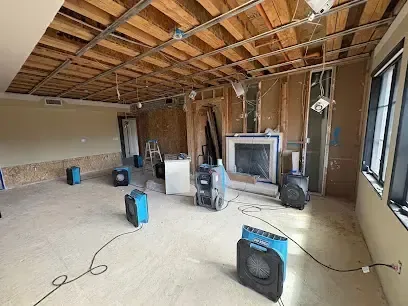
Air movers push dry air across wet surfaces, dehumidifiers pull the moisture out of that air, and the cycle repeats until the material releases its water. Closing the room keeps the loop tight, so the doors stay shut during a drying job.
- Air movers along walls and floors
- LGR dehumidifiers sized to the room
- Desiccant units for hardwood, slabs and cold spaces
How drying is verified
Meters read the moisture content of drywall, wood and concrete. The crew compares those numbers with a dry reference taken from an unaffected area of the same house, and the equipment stays until the two match. The daily log becomes part of the claim file. Equipment placement changes as the readings change, which is why the crew returns each day instead of setting everything once.
Drying after specific losses
The same equipment works after a burst pipe, a roof leak or a flood. What changes is the cutting: some losses need flood cuts, others only vent holes and injection.
The four stages of structural drying and dehumidification
- 01
Plan
Meters and a thermal camera set the equipment layout for each room.
- 02
Install
Air movers and dehumidifiers go in, and the space is closed to hold the loop in place.
- 03
Monitor
Daily readings show which materials are drying and which need more help from the crew.
- 04
Release
When every reading matches the dry reference, the equipment comes out.
Structural drying and dehumidification across Atoka and nearby towns
Drying jobs cover ZIP 38004, from Kearns Circle to the streets around Main Street, Faulkner Road and Highway 51, for single-family houses and small commercial buildings.
The same service nearby: structural drying and dehumidification in Arlington, Munford, Lakeland.
38002
Structural Drying and Dehumidification questions in Atoka, TN
How long does structural drying take?
Contained clean-water losses often dry in about three to four days. Wet cavities, hardwood and slabs take longer, and the readings decide the end date.
Why can the equipment not be turned off early?
Materials can read dry at the surface and still hold water inside. Stopping early lets that moisture migrate back and leads to odor and mold.
Is the equipment loud?
Air movers and dehumidifiers make a steady fan noise that is hard to sleep next to. Many owners stay elsewhere for the first night.
Will the power bill go up?
Yes, because the equipment runs around the clock. The crew notes the equipment runtime in the file, which helps when the claim is checked.
Can wet drywall be dried instead of replaced?
Often yes. Drywall that has not sagged or crumbled dries in place, and vent holes or injection ports reach the cavity behind it.
What is a dry reference?
A reading taken from an unaffected area of the same house, used as the target that wet materials must reach.
Walls still damp? Call the crew
One call starts the moisture map, the equipment layout and the daily readings for the whole structure.