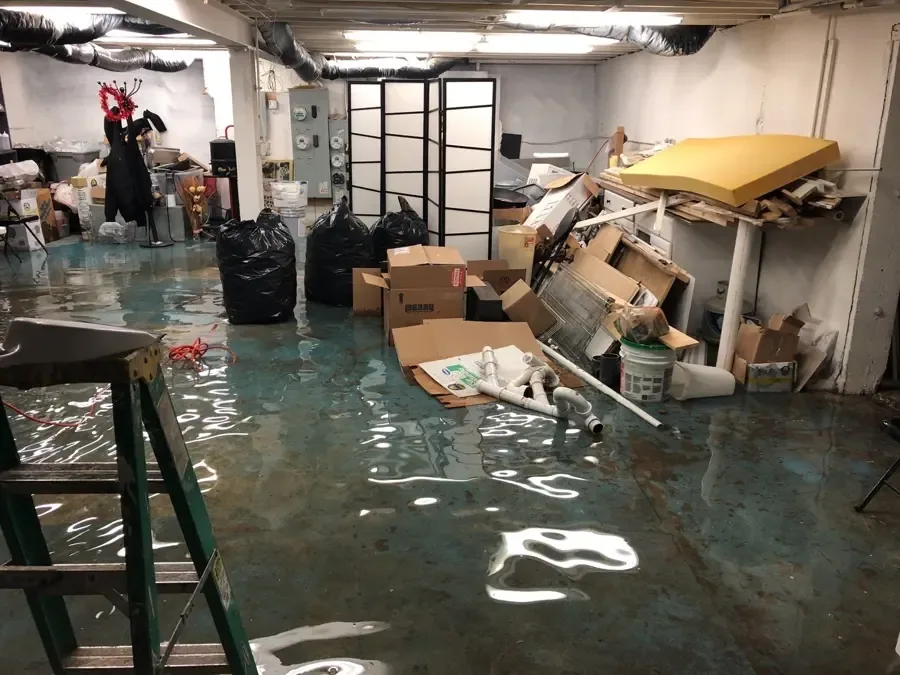
Sewage that comes up through a toilet, tub or floor drain is a health hazard as well as a mess. The Town of Atoka has also talked publicly about sewer projects, which raises questions about what is known. This post covers what cleanup removes, what the Town has said and how the structure is dried afterward.
Key takeaways
- Sewage is Category 3 water, so porous materials it touched are removed, not dried in place.
- Stop using water in the house as soon as a drain backs up, since every fixture adds to the flow.
- The Town holds 46 percent of the capacity at a shared wastewater lagoon in Munford, and the lagoon is to be expanded.
- An $8.1 million grant through the state, reported on November 30, 2023, funds a pump station replacement and a force main replacement.
- The sources read do not say whether those projects are finished.
What a sewage backup is
A sewage backup is wastewater coming up through the lowest drain in the house. A toilet, a tub or a floor drain is where it usually shows.
The IICRC S500 standard places sewage in Category 3, the grossly contaminated category. Anything porous that the water touched is treated as contaminated.
A backup can build slowly, with gurgling drains or a tub that drains poorly, or it can arrive all at once. Either way, the water in the room is treated the same.
The volume of water is usually small next to a flood. The contamination is what matters, not the amount.
First steps when a drain backs up
The first goal is to keep the backup from growing and keep people away from it.
Sewage that reaches electrical outlets or cords is also a shock risk, so power to the affected room is switched off at a dry panel.
- Stop running water, flushing and using the washer or dishwasher.
- Keep children, pets and anyone with a health concern out of the room.
- Wear rubber gloves and boots if the area must be entered.
- Photograph the backup before anything is moved.
- Skip household vacuums and fans, which spread contamination.
- Wash hands and any exposed skin with soap after contact.
What cleanup removes and treats
A crew handling sewage backup cleanup starts by extracting the liquid, then sorts what comes out from what stays.
Sorting happens room by room, so the crew can mark each item as kept, cleaned or discarded before the work moves on.
What comes out
Porous materials cannot be cleaned through, so they are removed and discarded:
- Carpet and pad
- Drywall and insulation that wicked sewage up the wall
- Baseboard and trim that were soaked
- Cardboard, fabric and upholstered items that sat in the water
What is cleaned and treated
Framing, subfloor, slab and hard surfaces are cleaned, then treated with an antimicrobial product. The crew checks them again before anything is rebuilt.
What the Town of Atoka has said about its sewer
The Town holds 46 percent of the capacity at a shared wastewater treatment lagoon in Munford, and the lagoon is to be expanded.
None of that tells a homeowner whether a particular backup is a house problem or a sewer problem, so the Town's statements are context, not a diagnosis.
The grant projects
The Town received an $8.1 million American Rescue Plan Act grant through the Tennessee Department of Environment and Conservation, reported on November 30, 2023. The state list of December 12, 2023 shows $8,192,350 for the Town of Atoka.
The grant projects are replacement of the Main Street Pump Station and replacement of the Kearns Lift Station wastewater force main.
What is not known
The sources read do not say whether the pump station, the force main or the lagoon expansion is finished. A homeowner should not assume that a backup is caused by these projects, or fixed by them.
Telling a house problem from a street problem
The clue is how many fixtures are involved. A single clogged toilet or a slow tub suggests a blockage in the house drain, while several fixtures backing up at once can point further along the pipe.
Responsibility for a private pipe is a question for the Town and a plumber, not an assumption. A backup affecting several homes on a street is worth reporting to the Town's Public Works, which is housed at Atoka Town Hall and covers utility billing, trash, parks and inspection permits.
- One fixture backed up: a plumber checks the house drain first
- Several fixtures backed up: report it and have the pipe checked
- Neighbors with the same problem: tell the Town's Public Works
Drying and checking the structure afterward
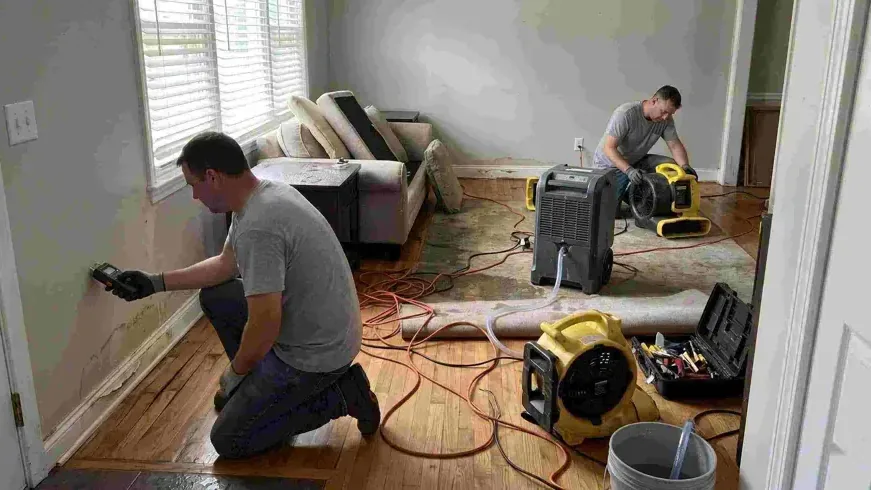
Once the contaminated materials are out and the surfaces are cleaned, structural drying begins. Air movers and a dehumidifier run while moisture meters track the framing and subfloor.
Odors fade as the contaminated materials leave and the surfaces dry, not from sprays alone.
The crew logs readings daily and removes the equipment when the structure reads dry. The finish depends on how far the sewage spread and what the walls are made of.
The main service page, sewage backup cleanup, describes the same steps in general terms.
Protecting health and keeping a record
Sewage carries bacteria, so a few habits protect the household while the cleanup runs. A short record also helps with repairs later.
Local help with water damage restoration can keep the photos, the list and the drying log in one file.
- Keep food and dishes away from the affected room
- Throw away porous items that the crew marks as contaminated
- Photograph each room before and after removal
- Keep a list of what was discarded, with rough ages
- Keep the drying log from the crew with the other records
Questions
Is sewage backup water dangerous?
Yes. It is Category 3 water that carries bacteria and other contamination. People and pets should stay out until the area is cleaned and treated.
Can a carpet be saved after a sewage backup?
Carpet and pad that sat in sewage are removed and discarded. The floor under them is cleaned and treated.
Are the Town's sewer projects finished?
The sources read do not say. They report a grant for a Main Street Pump Station replacement and a Kearns Lift Station force main replacement, but not a completion date.
Who should be told about a backup that affects neighbors too?
The Town's Public Works, housed at Atoka Town Hall. A plumber can also check whether the problem is in the house drain.
Why is the structure dried after sewage cleanup?
Wet framing and subfloor hold moisture that can lead to odors and further damage. Drying until readings match a dry reference finishes the job.
What is a pump station or lift station?
It is a point in the sewer system where pumps move wastewater to a place that gravity alone cannot reach. The Town's grant covers replacement of the Main Street Pump Station and a force main from the Kearns Lift Station.