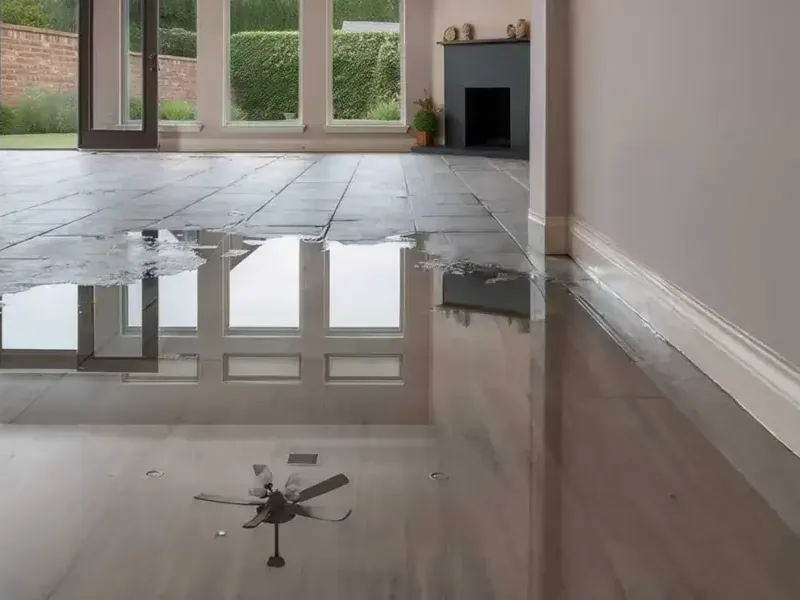
Fast storms can send creeks over their banks and into low-lying homes. Residents have told local TV that flooding has become a familiar sight during heavy rain. This post covers what happened on June 12, 2026, what the record shows about earlier floods and the steps for the first day once water is inside.
Key takeaways
- On June 12, 2026, storms dropped 3 to 6 inches of rain on parts of the city, creeks overflowed, low-lying areas flooded and trees fell.
- On April 3, 2025, police reported several flooded areas during a multi-day Mid-South storm and flood event.
- The police rule of thumb is simple: if the road cannot be seen through the water, do not drive through it.
- Creek water is flood water, so soaked porous materials are removed instead of dried in place.
- The first day runs in order: safety, photos, extraction, removal of wet materials, then drying.
What happened on June 12, 2026
Storms on June 12, 2026 dropped 3 to 6 inches of rain on parts of Bartlett. Creeks overflowed, low-lying areas flooded and trees fell.
A storm that drops that much rain fills low ground first, which is why low-lying homes see water before higher ones.
Residents told WREG that flooding has become a familiar sight during periods of heavy rain. That comment matches the record, which shows more than one flood event in recent years.
A pattern in the record
On April 3, 2025, the Bartlett Police Department reported several flooded areas that were still passable during a multi-day Mid-South storm and flood event.
The way the city drains is part of the background. It has 18 small watersheds that feed two major watersheds, splitting the city east to west.
A pattern is a reason to prepare, not a reason to panic. Knowing where the water collects makes the first day calmer.
Where the water goes
The north side of the city drains to the Loosahatchie River and the south side drains to the Wolf River. Between the small creeks and the two rivers, heavy rain has several places to collect.
What the creek gauge offers
A National Water Prediction Service gauge is titled Fletcher Creek at Bartlett. Households near creeks can watch it, along with weather alerts, when storms are in the forecast.
Never drive through water that hides the road
The Bartlett Police Department offers a rule of thumb: if the road cannot be seen through the water, do not drive through it.
Flooded roads can hide washouts and debris, and a few inches of moving water can float a car. The same caution applies to walking through a flooded yard.
Vehicles that sat in flood water have their own problems, and driving them through more water can stall the engine.
- Turn around instead of testing a flooded road
- Keep children and pets away from creek banks and moving water
- Move vehicles to higher ground before water rises, if time allows
The first day once water is inside
The first day is mostly about safety and speed. This order keeps people out of danger and keeps the damage from spreading.
People often want to start hauling belongings out at once. It is safer to wait until the power is off, then move items in stages and photograph them as they go.
Standing water wicks up drywall and into framing, so extraction is the step that cannot wait.
- Stay out of flooded rooms until the power is off at a dry panel.
- Photograph the high-water mark and each flooded room before moving anything.
- Lift papers, electronics and small valuables to a high shelf.
- Keep children and pets out of the water, which carries bacteria.
- Arrange extraction so standing water does not wick further into walls.
- Skip household vacuums and fans while water is still standing.
- Write down the depth of water seen and the time it was noticed.
Why creek water is handled differently from a leak
A creek crosses lawns, streets and ditches before it reaches a house, so the water carries soil, bacteria and debris. The IICRC S500 standard places that water in Category 3.
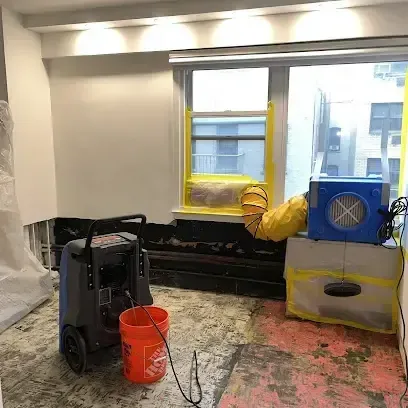
That is why flood water cleanup removes porous materials instead of drying them in place. Carpet, pad, wet insulation and the lower section of drywall come out, and surfaces that stay are cleaned and treated.
The materials listed below are usually removed:
- Carpet and pad that sat in the water
- Wet insulation in wall cavities
- The lower section of wet drywall
- Baseboard and trim that cannot be cleaned through
Drying after the cleanup
Once the wet materials are out, structural drying begins. Moisture meters and a thermal camera map what is still wet, and air movers and dehumidifiers run until readings match a dry reference.
Structural drying also covers the cavities nobody can see: wall bottoms, spaces under cabinets and the subfloor. Those spots hold water long after the surface looks dry.
Readings are logged daily, and the finish depends on how high the water rose and what the walls are made of.
A daily visit usually covers these checks:
- Moisture readings at the same spots each day
- Equipment placement and any changes
- A comparison against the dry reference
- Notes on any area that dries slower than expected
Trees and wet roofs after the same storm
Storm damage rarely comes from one source. The June 12 storms also brought trees down, and a limb that opens a roof lets rain into the attic.
A household with both creek water and a roof opening needs both problems handled in one plan. Local help with water damage restoration can look at the whole picture at once.
Wet attic insulation can sit unseen for a long time. A roof leak after a storm is easier to handle when it is found early.
Questions
Does creek flooding count as a leak?
No. A leak is usually clean water from inside the house. Creek water carries soil and bacteria, so it is handled as flood water.
What did the police say about driving through water?
The police rule of thumb is that if the road cannot be seen through the water, do not drive through it.
How much rain fell in the June 12, 2026 storms?
Storms dropped 3 to 6 inches of rain on parts of the city, according to the record for that day.
Can wet carpet be saved after a creek flood?
Carpet and pad that sat in creek water are normally removed. The floor beneath is cleaned, treated and dried.
How does a household watch a creek during a storm?
A National Water Prediction Service gauge is titled Fletcher Creek at Bartlett, and weather alerts add warning. Neither replaces judgment, and a flooded road is a reason to stay put.
Why does extraction come before anything else?
Water that sits wicks into drywall and framing and spreads contamination. Pulling the standing water first limits how far the damage goes.