Structural Drying and Dehumidification in Bartlett, TN
Water that is out of sight is still in the wood, drywall and slab. Controlled airflow, dehumidifiers and daily readings bring each material back to a dry value.
(888) 849-5796Call to plan the dry-out in Bartlett- LGR dehumidifiers
- Injection drying in walls
- Daily psychrometric logs
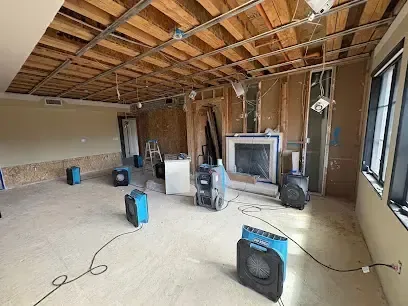
Structural Drying and Dehumidification: what to do first
- Keep the equipment on
Fans and dehumidifiers should run around the clock, since stopping lets wet materials rebound.
- Close doors and windows
Closed rooms let dehumidifiers work on the wet air instead of outdoor humidity.
- Leave the setup alone
Moving air movers changes airflow patterns, so ask before shifting anything.
- Expect daily visits
Readings are taken each day to decide what to move, keep or remove.
How the crew handles structural drying and dehumidification
Equipment sized to the loss
Class, water category and room volume decide how many air movers and dehumidifiers are set.
Targeted wall drying
Injection systems dry closed wall cavities without removing finished drywall when readings allow.
Psychrometric monitoring
Temperature, humidity and grain readings show whether the air can still take moisture from the materials.
What does structural drying and dehumidification cost in Bartlett, TN?
Structural drying runs from about $1,000 for one or two rooms to $15,000 or more for a whole floor or Class 4 loss that needs desiccant dehumidification.
One or two rooms
- Air movers and one dehumidifier
- Three to four days
- Daily readings
Several rooms or a ceiling
- Several LGR dehumidifiers
- Injection drying for walls
- Psychrometric logs
Whole floor or Class 4
- Desiccant dehumidification
- Hardwood and slab drying
- Extended monitoring
Ranges only, not a quote. The drivers are the water category, the square footage, the material class and how fast drying started. For a planning number, try the water damage cost calculator.
Extraction removes the standing water, but moisture stays in wood, drywall, insulation and concrete. Structural drying is the controlled process that removes it, and it is what separates a dry house from one that only looks dry.
Classes and categories set the plan
IICRC S500 groups losses into four classes by how much of the building is wet and how quickly the materials release moisture. Class 1 is a small area of low-porosity material, while Class 4 covers deep-held moisture in hardwood, plaster and concrete.
- Class 2 covers carpet and pad across a whole room.
- Class 3 is water from above, such as an overhead leak.
- Class 4 needs specialty drying for dense materials.
Why daily readings matter
Meters at fixed points show whether each material is drying or stalling. When walls stall, the setup is changed, and when they reach dry values, the equipment leaves. Without readings, a house can be declared dry while moisture is still in the framing. Hidden moisture behind baseboards and under flooring is exactly what the meters are there to find.
Drying after other losses
This work follows almost every other service in the list, from burst pipe cleanup to flood water cleanup. Skipping it is the most common reason a repair fails later.
The four stages of structural drying and dehumidification
- 01
Classify
Water category and drying class are set from the readings and the materials affected.
- 02
Set up
Air movers and dehumidifiers go in at the planned positions, with injection for closed walls.
- 03
Monitor
Daily readings track each material, and the setup is adjusted as the data moves.
- 04
Release
Equipment comes out once the materials hold at dry values, and the log goes in the file.
Structural drying and dehumidification across Bartlett and nearby towns
Drying jobs cover ZIP codes 38133, 38134 and 38135, from Ellendale, Burloe and Davies Plantation to Wellsgate, Stonetrace and Quail Ridge, and the shops and offices off Kirby-Whitten Parkway.
The same service nearby: structural drying and dehumidification in Arlington, Lakeland, Atoka.
38002
Structural Drying and Dehumidification questions in Bartlett, TN
How long does structural drying take?
Three to five days is typical for a room or two, and longer for hardwood, plaster or slab. The readings decide when it is finished, not a fixed number of days.
Why does the equipment have to run all night?
Drying stalls if the equipment stops, and wet materials can rebound. Continuous airflow and dehumidification keep moisture moving out of the framing.
Can drying happen without removing drywall?
Often yes, using vent holes or injection systems when the water was clean and caught early. Contaminated or long-soaked drywall is removed instead.
Is a dehumidifier from a hardware store enough?
A household unit moves a small fraction of the moisture that a low-grain refrigerant dehumidifier does, so it rarely dries framing to a clean reading.
Will the equipment raise my electric bill?
Running several machines for several days does use power. The log of equipment days also supports the claim for that cost.
What is a drying goal?
It is the moisture level of an unaffected material in the same house, used as the target. Materials are dry when they match it.
Dry the structure, not just the surface
Equipment sized to the loss and daily readings are what finish the job properly. One call starts the plan and the log.