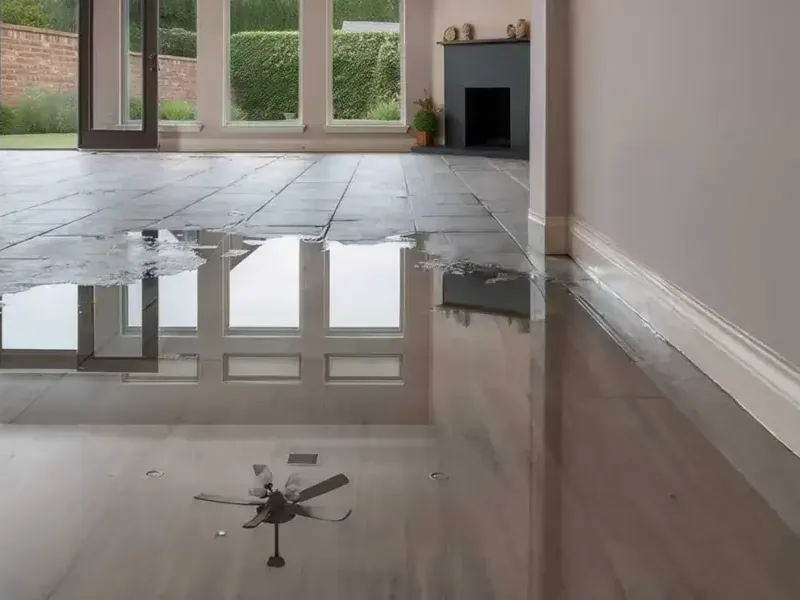
Northwood Estates is a lakeside subdivision near Black Ankle Drive, and news reports say homes there have flooded more than once. This post lays out what the record says, what is and is not known about the creek work, and the cleanup order after lake or creek water reaches a ground floor.
Key takeaways
- Northwood Estates flooded in 2009, affecting seven houses, and again about a year later.
- Heavy rain on the night of July 8 into 9, 2014 flooded ground floors, and water was at times two feet deep on Black Ankle Drive.
- Black Ankle Creek feeds the lake behind the homes, and in heavy rain the lake overflows and the creek cannot carry the water.
- Lake and creek water is flood water, so soaked porous materials are removed and the structure is dried afterward.
- The order is pump out, clear debris and mud, remove wet materials, then dry.
What the record says about Northwood Estates
News reports say the subdivision flooded in 2009, with seven houses affected, and flooded again about a year later.
Heavy rain on the night of July 8 into 9, 2014 put water into ground floors, and water was at times two feet deep on Black Ankle Drive.
Why the water has nowhere to go
Black Ankle Creek feeds the lake behind the homes. When rain is heavy, the lake overflows and the creek cannot carry the water away.
That is a drainage problem, not a plumbing one, so the water arrives from outside and fills the lowest part of the house first.
What the record does not say
The reports describe where water went and when. They do not give a total for the damage, and they do not cover every home in the subdivision.
What has been done and what is not known
The state replaced a drainage culvert near the subdivision a few years before 2014, and that eased the flooding a little.
As of July 2014, the Town said it held a $900,000 FEMA grant to dredge and widen Black Ankle Creek, and the work was stalled while the Town acquired easements.
The sources read do not say whether the dredging was finished. A household here should plan as if heavy rain can still bring water to the ground floor.
The first day after lake or creek water enters
A burst supply pipe releases clean water, and clean water can often be dried in place when it is caught early. Water that comes in from outside has already crossed yards, streets and drainage ditches.
The IICRC S500 standard puts that kind of water in Category 3, so the plan shifts from drying everything to removing what the water soaked. Local help with water damage restoration follows the same split.
Water from a lake or creek carries mud, bacteria and debris, so it is flood water, not a simple leak. The steps below keep people safe and protect the evidence of the loss.
More detail sits under flood water cleanup.
Standing water is only part of the picture. Mud, debris and wet materials all need a plan before drying equipment goes in.
- Stay out of rooms with standing water until the power is switched off at a dry panel.
- Photograph the high-water mark on the walls and each room before anything moves.
- Lift papers, electronics and small valuables to a dry shelf.
- Keep children and pets out of the water.
- Stay off flooded streets, since depth is hard to judge.
Pumping out the standing water
The first job is water extraction. Pumps and extractors remove standing water before it wicks into pad, drywall and framing.
Mud and debris are cleared as the water goes, because silt left on a floor dries into a film that holds contamination.
Ground-floor water often leaves a layer of fine silt on every surface. Shoveling and scraping come before any wet-vacuum work, so the equipment is not clogged.

Removal and drying
Once the floor is clear, the crew removes porous materials the water touched. That usually means carpet and pad, wet insulation and the lower section of drywall.
Then structural drying begins. Air movers and dehumidifiers run, readings are logged, and drying time depends on the job, not on a set number of days.
- Carpet, pad and wet insulation come out
- Lower drywall is cut out above the high-water mark
- Hard surfaces are cleaned and treated
- Framing and subfloor are dried until readings match a dry reference
Sorting belongings after the water
Belongings that sat in lake or creek water are sorted while the rooms are opened up. Porous items soak up contamination and are usually discarded.
Solid items such as glass, metal and hard plastic can usually be cleaned and kept.
- Photograph each item before it leaves the house, for the record
- Set aside documents, photos and keepsakes for a closer look
- Discard upholstered pieces, mattresses and soaked cardboard
- Keep a short list of what was lost, with rough ages
Documenting the loss and planning ahead
A clear file makes repairs and any claim easier to sort out, and a short plan makes the first day of the next heavy rain easier.
For the record
- Photos of the high-water mark in every flooded room
- The depth of water seen, written down with the date
- A moisture log kept by the crew as drying proceeds
- A list of discarded items, with photos taken before they leave the house
Before the next heavy rain
A few preparations take little time and make the first day easier.
- Know where the main water valve and the electrical panel are
- Keep a short list of what sits on the ground floor
- Store papers and keepsakes above floor level
- Photograph the rooms while they are dry, for comparison later
Questions
How often has Northwood Estates flooded?
News reports describe floods in 2009 and about a year later, and a third on the night of July 8 into 9, 2014. Each time water reached the ground floors of homes.
Was the Black Ankle Creek dredging completed?
The sources read say only that the Town held a $900,000 FEMA grant in July 2014 and that the work was stalled over easements. They do not say how it ended.
Is lake water the same as rain water?
No. Overflow from a lake or creek picks up mud, bacteria and debris along the way, so it is handled as flood water.
Can wet carpet be saved after a flood?
Carpet and pad that sat in flood water are normally removed. The floor beneath is cleaned, treated and dried.
Why does silt matter after the water is gone?
Silt dries into a film that holds bacteria and keeps surfaces damp. It is cleared before drying equipment goes in so the equipment works on clean surfaces.
Should a flooded home be entered before the power is off?
Not until the circuits are checked. Water, wet outlets and live power are a shock risk, so the panel is switched off from a dry spot and an electrician checks the wiring before the power returns.