Water Extraction in Oakland, TN
When creek or lake water reaches a ground floor, pumping comes before anything else. The crew removes standing water and soaked pad, then maps what stayed wet.
(888) 849-5796Pump out my flooded rooms- Truck-mounted pumps
- Pad and carpet lifted
- Moisture map included
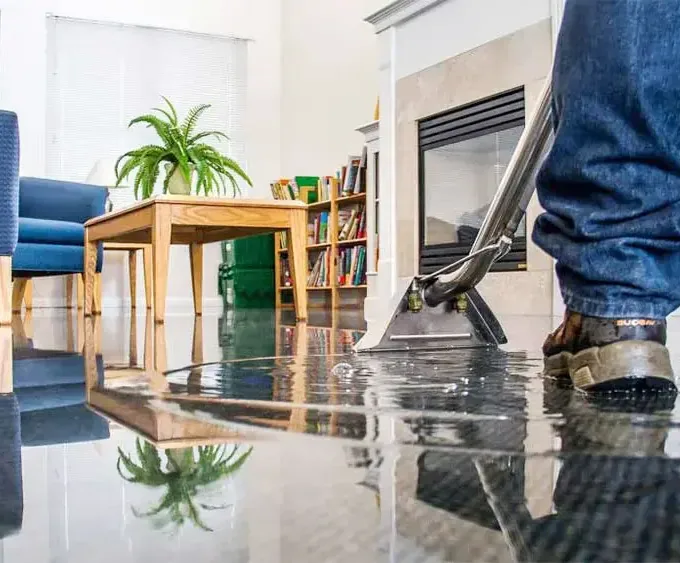
Water Extraction and Removal: what to do first
- Stop the source
Close the valve or stop the inflow first, because extraction cannot keep up with water that is still arriving.
- Pump the standing water
Truck-mounted units pull the pooled water, then wands work across carpet and pad to lift what the fibers are holding.
- Pull what cannot dry
Saturated pad, wet baseboards and swollen trim come out where drying them in place would take too long.
- Map and set equipment
Meters trace moisture into walls and subfloors, and air movers and dehumidifiers go in as soon as the water is out.
How the crew handles water extraction and removal
Water still moving
Creek and lake overflow can keep rising, so the crew pumps what has pooled and returns for a final pass once the water has stopped coming in.
Carpet over pad
After clean water, carpet is extracted in place and kept. The pad underneath is usually replaced because it holds water like a sponge.
Water that crossed rooms
Water spreads under baseboards into drywall, which is why every pump-out ends with meter checks at the base of each wall.
What does water extraction and removal cost in Oakland, TN?
Extraction runs from $500 for one room to $12,000 or more when contaminated water covers a whole floor, and the water category and square footage decide where a job lands.
A room or a hall
- Pump and wand extraction
- Carpet drained in place
- Meter readings recorded
Several rooms
- Soaked pad cut out
- Baseboards pulled for airflow
- Drying gear set at once
Category 3 or a full floor
- Contaminated water protocol
- Porous flooring removed
- Containment and antimicrobial
Ranges only, not a quote. The drivers are the water category, the square footage, the material class and how fast drying started. For a planning number, try the water damage cost calculator.
Standing water is the first job on any wet floor. In Oakland it often comes from outside, as creek and lake overflow did in Northwood Estates, and it has to be pumped before anyone can see how far the damage went. Quick removal keeps more of the flooring and trim.
How the pump-out works
A truck-mounted unit supplies the suction, and the crew works wands across carpet and pad in overlapping passes so the water held in the fibers comes out with the pooled water. Hard floors get squeegees and a wet vacuum, and low spots are chased until nothing pools.
- Pooled water pumped out of rooms and closets
- Carpet extracted in place when the water was clean
- Pad lifted when it cannot be dried flat
On hard surfaces the crew works toward drains and low corners, because water follows gravity and hides under cabinets and along door thresholds.
What happens once the water is gone
Extraction removes the bulk, not the moisture inside walls and subfloors. Meters and a thermal camera show where the water traveled, and the next step is structural drying with air movers and dehumidifiers set to the readings. A thermal camera shows cool, wet patches on ceilings and wall bases that a visual check misses.
When extraction is not enough
Water from a drain backup or from rising creek water is Category 3, and then the job becomes containment and removal, not pumping alone. See flood water cleanup and sewage backup cleanup for those jobs. Standing water that sits more than a day or two also drifts toward Category 2 or 3, so early pumping protects the materials that could still be saved.
The four stages of water extraction and removal
- 01
Walk the water
The crew checks depth, source and the rooms reached before a single hose is unrolled.
- 02
Extract and lift
Pumps clear the pooled water, then wands and squeegees take the rest off floors and carpet.
- 03
Remove the losses
Pad, trim and any porous material beyond saving are bagged and carried out.
- 04
Hand off to drying
Readings go into the file, and drying gear takes over from the pumps.
Water extraction and removal across Oakland and nearby towns
The crew pumps out water across ZIP 38060, from Northwood Estates and Twin Oaks to Cross Creek and the Highway 64 corridor, and out to homes along Highway 194.
The same service nearby: water extraction and removal in Arlington, Lakeland, Bartlett.
38002
Water Extraction and Removal questions in Oakland, TN
How much water can a truck-mounted pump handle?
More than a shop vacuum by a wide margin, which is why a ground floor under several inches of water is pumped out by machine and not mopped.
Is the carpet ruined once it floods?
Not always. After clean water, carpet can be extracted and dried in place, but the pad below is usually replaced, since it is cheap to swap and slow to dry.
Can I start pumping myself?
A small wet vacuum helps on a puddle. Deeper water needs real extraction, and electrical hazards make standing in it unsafe.
What if the water came from the creek?
Rising creek water is treated as Category 3, so the crew uses protective gear, removes porous materials and disinfects.
Do I need extraction if the water is only damp?
Damp carpet and pad still hold water. A meter check tells whether extraction or only drying is needed, and reading the meter is the only reliable way to know.
Will the crew explain the readings?
Yes. The moisture map shows which materials were wet, and each visit adds new readings to the file.
Get the water out of your floors
Say where the water came from and how deep it stands, and the crew brings pumps sized to the job and the equipment to dry what is left.