Water Extraction and Removal in Munford, TN
In Munford, standing water from a flash flood, a failed pipe or a backed-up drain comes out first, by truck-mounted pump and wand, so drying can begin.
(888) 849-5796Call about water on the floor- Truck-mounted pump-out
- Pad and carpet extracted
- Moisture map filed
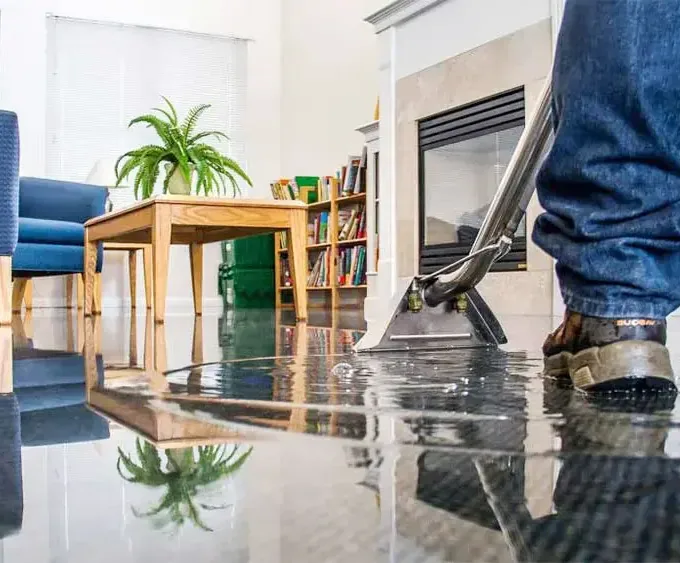
Water Extraction and Removal: what to do first
- Stop the source
The first move is closing the valve or stopping the inflow so the pumps are not chasing new water.
- Make the room safe
Power to wet circuits goes off if the panel is reachable, and fragile items leave the floor before hoses run.
- Extract everything it can
Carpet and pad are extracted in place, hard floors are wanded, and low spots are worked until no standing water remains.
- Map and hand off to drying
A moisture map shows which walls and floors stay wet, and the drying plan is set from it.
How the crew handles water extraction and removal
What gets pumped
Water standing on hard floors, in carpet and pad, in low corners and in cabinet toe kicks is extracted before anything is torn out.
What gets removed
Pad that cannot be saved, wet baseboards and swollen trim come out so air can reach the wicking wall base and the subfloor.
What gets recorded
Photos of the standing water, extraction notes and the first meter readings go into the file before equipment is set.
What does water extraction and removal cost in Munford, TN?
Cost depends on rooms wet and water cleanliness: $500 to $2,500 for one room, $2,500 to $6,000 for several, $6,000 to $12,000+ for Category 3 or a whole floor.
One room or a hallway
- Truck-mounted extraction
- Carpet and pad extracted in place
- Moisture map for the file
Several rooms
- Pad removed where it cannot be saved
- Baseboards pulled where water wicked
- Drying equipment set the same visit
Category 3 or whole floor
- Contaminated water handled as Category 3
- Porous flooring removed
- Containment and antimicrobial
Ranges only, not a quote. The drivers are the water category, the square footage, the material class and how fast drying started. For a planning number, try the water damage cost calculator.
In Munford, water on a floor is a clock that starts at the first drip. Pumping standing water out keeps it from wicking into drywall, trim and subfloor, and it gives the drying crew a clear read on what is truly wet.
When floods put water inside buildings
The worst flooding on record in Tipton County came on May 1, 2010, and in July 2019 six or seven Munford businesses took flood water inside. Water that comes in from outside carries mud and runoff, so it is pumped out first, then the floor is judged for removal before any drying starts. The crew notes the waterline and the depth first, because those two facts help the adjuster separate flood loss from other damage.
- Standing water from hard floors and low spots
- Water held in carpet and pad
- Water pooled in cabinet toe kicks and door tracks
What pump-out does not finish
Extraction is the first half of the job. Walls, framing and subfloor still hold moisture after the pumps stop, so the same visit ends with a moisture map and a drying plan, and the file notes which materials were removed and why. Drying then continues under structural drying, with daily readings deciding when equipment leaves.
Sewage or creek water changes the plan
If the water came from a sewer or a flooded yard, the job becomes sewage backup cleanup or flood water cleanup, with containment and protective gear before a single wand touches the floor. The main page for water extraction and removal lists the full scope.
The four stages of water extraction and removal
- 01
Call and triage
A few questions about the water source, depth and rooms decide the pumps, hoses and protective gear loaded for the job.
- 02
Pump and extract
Truck-mounted extraction handles standing water and carpet, wands work the hard floors, and the crew keeps going until readings drop.
- 03
Remove what cannot dry
Pad, soaked baseboards and swollen trim come out, with photos taken first for the claim.
- 04
Hand off to drying
Air movers and dehumidifiers are set, the moisture map is saved, and a return visit is planned for readings.
Water extraction and removal across Munford and nearby towns
The crew covers ZIP 38058, from downtown Munford and the Eastwood and Franklin Meadows names out along Tipton Road, Gilt Edge Road and State Route 206.
The same service nearby: water extraction and removal in Arlington, Atoka, Lakeland.
38002
Water Extraction and Removal questions in Munford, TN
How much water can the equipment pull out?
Truck-mounted units move large volumes, and wands reach edges, stairs and low spots. The goal is no standing water and as little left in carpet and pad as extraction can manage.
Can carpet and pad be saved after extraction?
Clean-water carpet that has not sat long can often be dried in place once the pad is extracted. Pad is usually replaced, and anything touched by flood water or sewage is removed.
Is flood water extracted the same way?
The pumps are the same, but flood water is Category 3, so protective gear, containment and removal of porous materials come with it, and the area is disinfected afterward.
Does extraction come before drying?
Yes. Drying equipment works on moisture inside materials, not on standing water, so the water comes out first. Setting fans over a flooded floor only pushes humidity into the air.
What should stay off the floor during extraction?
Furniture legs, electronics, rugs and paper goods should leave wet floors if it is safe, and nobody should walk through water near outlets or power strips.
Will belongings need to be moved?
Small items and loose rugs are lifted out of the water path, and furniture on wet carpet is blocked up on foam or wood so it does not stain.
Get the water out before it wicks
Pumps, extractors and meters go with the crew, and the first readings are saved to the claim file on the first visit.