Water Extraction and Removal in Lakeland, TN
Water on a Lakeland floor keeps moving into pad, baseboards and wall bases until it is pulled out. Truck-mounted and portable extractors lift it first, then drying equipment handles the moisture left behind.
(888) 849-5796Lift the water off the floor- Truck-mounted pumps
- Wet pad removed
- Moisture map per room
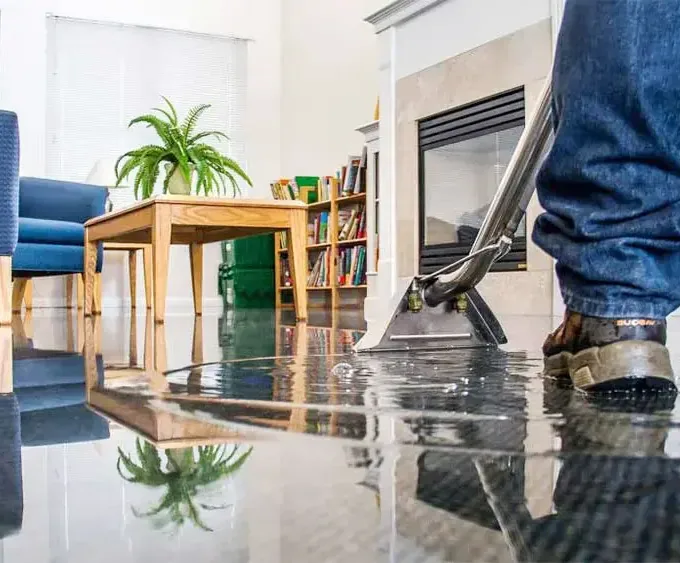
Water Extraction and Removal: what to do first
- Stop the source
Close the fixture valve or the main shutoff. When a burst pipe cannot be reached, MLGW's 24-hour emergency hotline sends crews who cut the supply.
- Power down wet rooms
Switch off breakers serving wet areas and keep clear of outlets, cords and appliances sitting in water.
- Lift what can move
Pull rugs, books, electronics and wood furniture legs out of the water so stains and swelling stop spreading.
- Describe the loss
Tell the crew which rooms are wet, where the water came from and how long it stood, so the right pumps are loaded.
How the crew handles water extraction and removal
Category decides the plan
IICRC S500 sorts water into three categories, and that sorting decides what gets extracted and what gets removed outright.
Carpet and pad
Carpet can often be extracted in place while the pad below is lifted, since pad holds water and seldom dries well.
Hard surfaces
Hardwood, tile and laminate get tools matched to the surface, and water is drawn from seams and under cabinet toe kicks.
What does water extraction and removal cost in Lakeland, TN?
A room or hallway usually costs $500 to $2,500 to extract, while a Category 3 loss or whole floor can reach $6,000 to $12,000+. Square footage and standing time move the number.
A single room or hall
- Truck-mounted pump-out
- Carpet extracted in place
- Readings logged per room
Several rooms
- Wet pad cut out and bagged
- Baseboards lifted where wicked
- Air movers set before leaving
Category 3 or a full floor
- Contaminated flooring removed
- Containment and antimicrobial
- Protective gear for the crew
Ranges only, not a quote. The drivers are the water category, the square footage, the material class and how fast drying started. For a planning number, try the water damage cost calculator.
Most Lakeland homes are detached houses, so an extraction call usually begins in one wet room and spreads through carpet, pad and wall bases. Taking the water out early keeps that spread small and the repair list short.
How extraction works on each floor type
Large carpeted areas go to the truck-mounted unit, which pulls far more water than a shop vacuum. Portable extractors handle stairs, closets and corners, and wand tools draw water out of hardwood seams and tile grout.
- Carpet is extracted in place when the pad can be saved.
- Saturated pad is cut out and bagged.
- Toe kicks and baseboards come off where water wicked behind them.
Storm water and indoor leaks are different jobs
A supply pipe leak puts clean water on the floor, while runoff from a heavy storm does not. The city's separate storm sewer carries only rainwater, and as of 2013 it had 28 outfalls into 8 streams, so a hard rain sends a lot of water across town. Anything that enters from outside is handled as Category 3, with more of the flooring removed.
Hardwood gets a gentler approach, with low-pressure tools and drying mats instead of aggressive suction, because forcing the pull can cup boards. Photos and readings from the visit go straight into the claim file.
What follows the pump-out
Extraction removes liquid water only. Framing, subfloor and drywall still hold moisture, so air movers and dehumidifiers go in next, as described under structural drying. For a pipe break at the source, see burst pipe cleanup, and for rising water outdoors, flood water cleanup.
The four stages of water extraction and removal
- 01
Assess and classify
Moisture meters and a thermal camera find the wet areas, and the crew assigns a water category before any tool is used.
- 02
Extract in passes
Truck-mounted units clear large floor areas, then portable extractors reach closets, stairs and tight corners.
- 03
Remove what cannot stay
Pad, soaked baseboard and swollen material come out so they stop feeding moisture back into the room.
- 04
Hand off to drying
Air movers and dehumidifiers go in, and readings are logged so the claim file shows the starting point.
Water extraction and removal across Lakeland and nearby towns
Extraction covers ZIP 38002, including Woodbridge, Oakwood Grove, Winstead Farms, the Garner Lake lakefront subdivisions and the newer streets near Chambers Chapel Road and Canada Road.
The same service nearby: water extraction and removal in Arlington, Bartlett, Oakland.
38002
Water Extraction and Removal questions in Lakeland, TN
Can water be extracted from carpet without pulling it up?
Often yes. Carpet is extracted in place and the pad is checked with a meter. If the pad is saturated or the water was dirty, the pad is cut out and replaced.
How soon should extraction happen?
As soon as it is safe, since water keeps wicking into baseboards and drywall. Waiting a day or two raises both the drying time and the chance of microbial growth.
Does it matter where the water came from?
Yes. Supply water is cleaner than a toilet overflow or a creek surge, and the category sets which materials are removed. Category 3 water usually means porous flooring does not stay.
Is storm water handled differently?
Water that comes in from outside, such as runoff from a heavy storm, is treated as contaminated. Floor materials it touched are usually removed rather than dried.
Is extraction enough to dry the house?
No. Extraction removes the liquid, but moisture stays in framing and subfloor. Dehumidifiers and air movers finish the job while readings confirm the structure has reached dry standards.
Should the insurance company hear first?
Report the loss, but start extraction without waiting for an adjuster. Photos, moisture readings and a written scope from the crew give the claim file solid documentation.
Ready to get the floor dry?
Tell the crew which rooms are wet and where the water came from, and the right pumps and drying equipment are loaded for the visit.