Flood Water Cleanup in Lakeland, TN
Rising water carries silt and contaminants into a house, so flood cleanup moves quickly from extraction to mud-out and removal. Lakeland sits in two river basins, with creeks and storm drains across town.
(888) 849-5796Start the mud-out- Mud-out and extraction
- Category 3 protocol
- HEPA air filtration
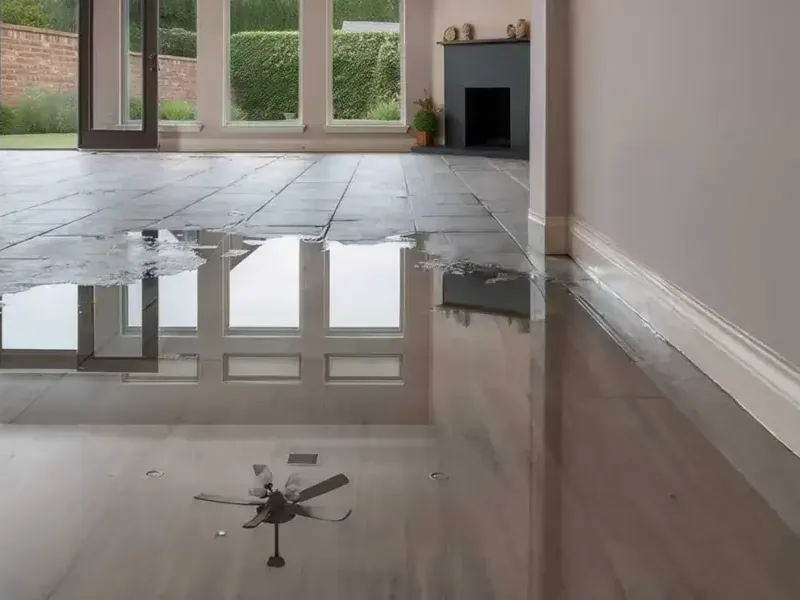
Flood Water Cleanup: what to do first
- Stay out until it is safe
Do not wade through floodwater near outlets, and keep children and pets away until the power is off.
- Check flood insurance
Read the policy first. Standard homeowners coverage often excludes rising water, and flood coverage is separate.
- Photograph high-water marks
Photograph the water mark on walls and furniture before any mud is moved, since it documents depth for the claim.
- Book the mud-out
Tell the crew how deep the water got and how long it stood, so pumps, shovels and protective gear are loaded.
How the crew handles flood water cleanup
Category 3 by default
Water that enters from outside is treated as contaminated, so porous materials it touched are removed, not dried.
Mud and silt
Silt is shoveled and washed out before drying begins, because it holds moisture and odor against the floor.
Antimicrobial and air
Surfaces get antimicrobial treatment, and HEPA filtration runs while demolition dust is in the air.
What does flood water cleanup cost in Lakeland, TN?
Shallow water through a few rooms usually costs $4,000 to $10,000, most of a ground floor $10,000 to $25,000, and deep water or a long exposure $25,000 to $50,000+.
A few rooms, shallow water
- Extraction and mud-out
- Pad and lower drywall cut
- Antimicrobial and drying
Most of the ground floor
- Flooring and lower walls removed
- Doors and cabinets addressed
- Containment and HEPA air
Deep or long exposure
- Walls gutted where wet
- Contents hauled out
- Extended drying and testing
Ranges only, not a quote. The drivers are the water category, the square footage, the material class and how fast drying started. For a planning number, try the water damage cost calculator.
The city keeps watch on rising water. On February 28, 2018, after days of rain, it barricaded Stewart Road at Old Brunswick Road in north Lakeland, the first street closed in Shelby County that day.
What the flood maps mean for a claim
FEMA issued new Flood Insurance Rate Maps covering most of the city, effective February 6, 2013, and the city takes part in the National Flood Insurance Program. Homes with federally backed mortgages in Zone A or Zone AE, the 100-year floodplain, must carry flood insurance, and the city recommends it elsewhere too.
Creeks, basins and storm drains
The city drains to the Loosahatchie River and Wolf River basins, with Scotts Creek, Oliver Creek and Rocky Branch Creek among the receiving waters. The storm sewer carries only rainwater, so water that enters a house from outside brings silt and debris with it. Garner Lake is fed by Scotts Creek at its south end, so lakefront homes sit near moving water as well.
- Extract the water and shovel out the mud.
- Remove porous materials the water touched.
- Treat, dry and test before rebuilding.
What comes after mud-out
Standing water is removed as described in water extraction, and drying follows structural drying practice. If sewage mixed in, the rules in sewage backup cleanup apply too. Contents are sorted into what can be cleaned and what must go, and a photo of each item supports the claim.
The four stages of flood water cleanup
- 01
Stabilize the site
Power is checked, standing water is pumped, and the crew sets up containment and protective gear.
- 02
Mud-out and extraction
Silt is removed first, then truck-mounted units clear the water from what remains.
- 03
Remove and treat
Porous flooring, pad and wet lower drywall come out, and antimicrobial goes on surfaces that stay.
- 04
Dry and test
Dehumidifiers and air movers run until readings reach a dry reference, then surfaces are tested.
Flood water cleanup across Lakeland and nearby towns
Flood calls cover ZIP 38002, including Oakwood Grove, Estates of Chambers Chapel, Arcadia, homes near Scotts Creek and Garner Lake, and the stretch along Canada Road.
The same service nearby: flood water cleanup in Arlington, Bartlett, Oakland.
38002
Flood Water Cleanup questions in Lakeland, TN
Does homeowners insurance cover flood water?
Usually not. Standard policies tend to exclude rising water, and flood coverage is a separate policy. The city says flood insurance is available and recommended, and required for mortgages in Zone A or Zone AE.
Why is flood water treated as contaminated?
It carries silt, runoff and debris from outside, so IICRC S500 classes it as Category 3. Porous materials it touched are removed rather than dried.
Can carpet be saved after a flood?
Almost never. Carpet and pad that sat in outside water are removed, and the subfloor is cleaned and dried before new flooring goes down.
How long does flood cleanup take?
Mud-out and removal usually take a few days, and drying adds several more. Deep water or a long exposure needs more time and testing before rebuilding starts.
What documents help a flood claim?
Photos of the high-water mark, moisture readings, a room-by-room scope and receipts. Keep damaged items until the adjuster has seen them, if possible.
Ready to get the water out?
Share the depth, the rooms and how long the water stood, and the crew loads pumps, protective gear and drying equipment for the visit.